
Engineering teams often celebrate velocity. By the time prototype version 15 is printed overnight and tested in the morning, version 16 is already underway – often before the underlying issues are fully understood. However, speed does not always translate to forward progress.
The design tools, software, and rapid prototyping solutions used to develop physical products have changed dramatically over the past few years. Design software is more user-friendly, sketching early ideas directly into CAD has become common practice, and producing 3D printed parts is now routine. This has led to a mindset that “Quick CAD, 3D Print, Test, Fail – REPEAT” is the fastest and most efficient way to develop a product. But in reality, this approach often misses a critical element, resulting in longer development times and lower confidence that the final product is robust and well-suited for volume manufacturing.
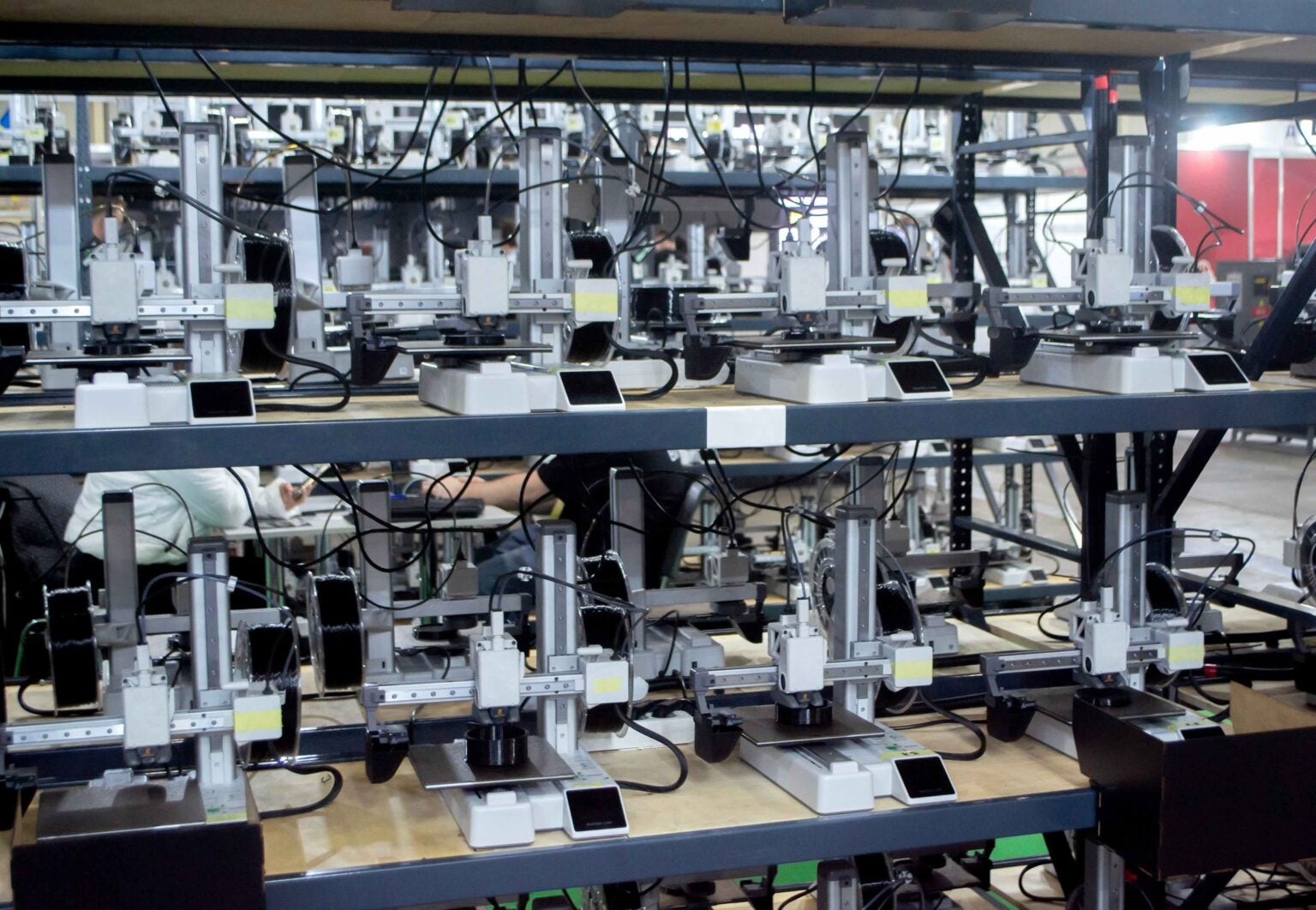
In many discussions related to rapid product development, there is a strong emphasis on “failing fast”. More progressive versions of this approach describe “failing fast forward” as a way to capture learning throughout the process. The challenge with this mindset is that the fundamental drivers of any design (e.g. physics, chemistry, material properties, mechanics, dynamics, thermodynamics) are best understood by reviewing the first principles governing the design space before entering the sketch, build, and test cycle.
In practice, this means sitting down with a pencil and paper, a blank spreadsheet, a textbook, or even an AI assistant as your guide to deconstruct the problem into the first principles governing the situation. What are the key driving factors for the design? How much energy will I need? What are the key dependencies? What feature or characteristic is most important? What first order calculations can be done to understand the key factors driving performance?
First principles thinking, as an early step in the design process, leads to a more complete understanding of the drivers behind a design. It informs the many tradeoffs that collectively determine the latitude and robustness of the product.
Understanding the fundamental physics and engineering principles can reveal core sensitivities within a design, which in turn helps guide decisions around features and performance. A very simple example could be understanding which feature or features results in the stiffest component or assembly. Even if some simplification of the design is necessary, the key drivers can often be identified through free body diagrams, hand calculations, or simple analyses. These insights allow development engineers to make more informed and optimized design choices. While finite element analysis (FEA) tools can help avoid unnecessary design or hardware iterations, basic “back of the envelope” calculations can often identify first principle drivers very quickly and efficiently.

Even if formulas and analysis tools are not used regularly, the core philosophy of understanding first principles before detailed design leads to more targeted iterations. This approach should begin at the system architecture level, progress through subsystems, and eventually down to individual components.
With a clearer understanding of the first principles and a defined design concept, rapid prototyping and testing can then provide very high value. At this stage, prototyping serves primarily as a confirmation or verification step rather than a purely exploratory one. AI tools also play a complementary role by refining and validating first-order analyses.
Despite its importance, this step is often bypassed. The widespread availability of 3D printing, the emerging practice of sketching concepts directly in CAD, and even the emphasis on “CAD to print” in engineering and STEM education all contribute to the development philosophy of build, test, and iterate.
While producing physical prototypes is very exciting and immediately gratifying, repeated iteration without a strong analytical foundation can lead to extended development cycles and limited understanding of critical design parameters. This can make it difficult to assess key sensitivities, performance thresholds, and manufacturing latitude at scale. With multiple iterations and marginal improvements completed, teams may also develop substantial “design inertia,” becoming overly fixated on one direction and overlooking alternative, potentially more resilient solutions.
Design tools, training, and rapid prototyping capabilities will continue to improve, which is a great thing. The ability to produce representative parts quickly and cost effectively enables early validation and reduces risk. However, for teams focused on minimizing the development time to commercialize high-value products, it is important to ensure that sufficient time is spent understanding first principles before committing to iterative prototyping. The most effective path to a robust, manufacturing-ready product is grounded in a clear understanding of the important drivers and designing for performance before testable hardware is built.
Looking to connect with an experienced team?
Look no further than Re:Build Fikst! We are excited to connect with you.
